How to Write a Personal Essay in 7 Simple Steps (With Examples)
The blank page feels simple at first. You sit down to write about yourself, and suddenly nothing sounds right. The story feels ordinary. The words feel forced. You know what…

Writing tips help you organize ideas, choose suitable words, and communicate clearly for different purposes and audiences. They may improve sentence flow, tone, structure, description, and the overall effectiveness of your writing.
Explore practical lessons on writing styles, tone, essays, descriptive writing, literary techniques, and common writing problems. Each lesson provides clear explanations and examples to help you write with greater clarity, accuracy, and purpose.
The blank page feels simple at first. You sit down to write about yourself, and suddenly nothing sounds right. The story feels ordinary. The words feel forced. You know what…
The AP Lang rhetorical analysis essay asks you to analyze how a writer builds a message to influence an audience. You are given a passage and expected to explain how…

The ellipsis (…), often called the dot, dot, dot, is one of the most expressive punctuation marks in English. It can show that words have been left out, that someone…

The hyphen (-) and the dash (– or —) look similar, but they play very different roles in writing. One connects ideas, while the other separates them. Yet, they’re often…
The dash (— or –) can add emphasis, show interruption, or connect ideas more dynamically than commas or parentheses. But not all dashes are the same. English uses two main…
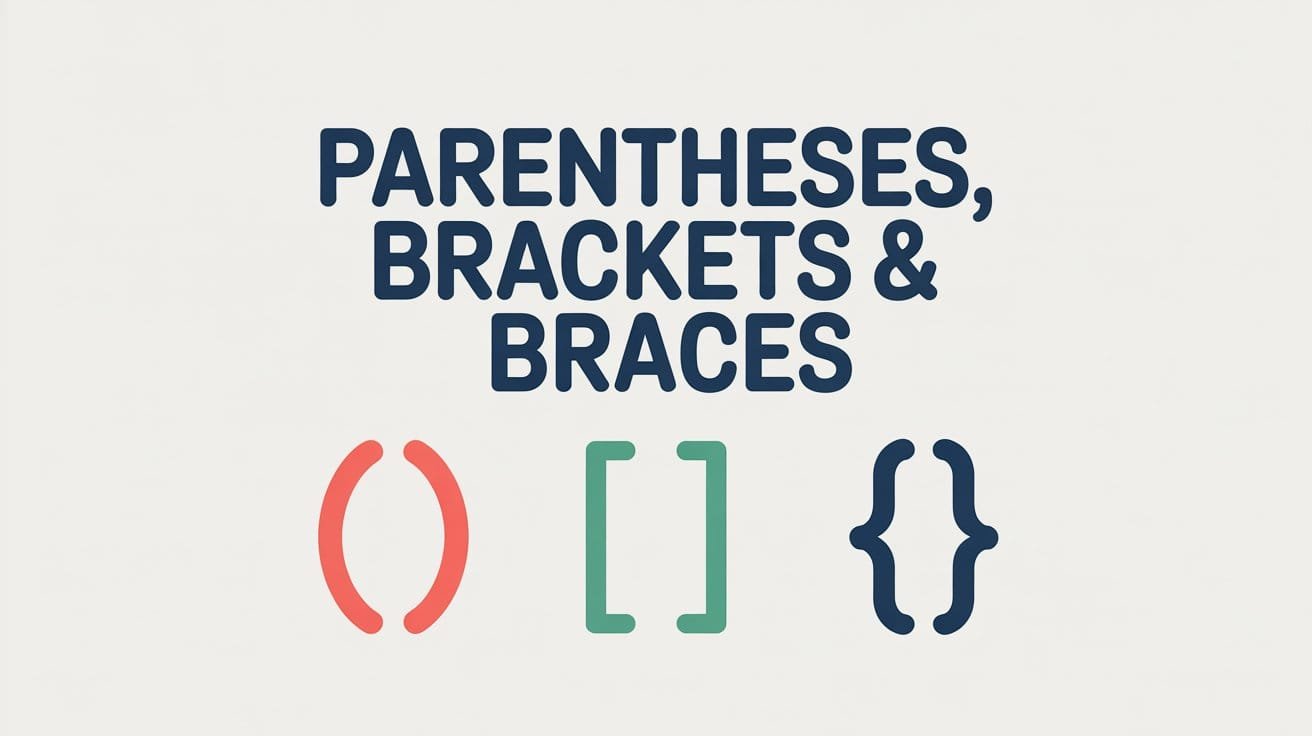
Parentheses, brackets, and braces often appear in the same category of punctuation, yet each has a distinct role in shaping meaning and structure. These marks help writers include extra details,…

Scare quotes are used not to show someone’s exact words, but to suggest irony, doubt, or distance from a term or phrase. They let the writer hint that a word…

An explanatory essay is a type of writing that aims to explain a concept, process, or idea using facts, examples, and logical reasoning. Instead of arguing or persuading, it helps…
Short sentences can make your writing sound flat and disconnected. Sentence combining helps you turn those short ideas into smoother, more natural sentences. It’s a simple grammar skill that improves…